
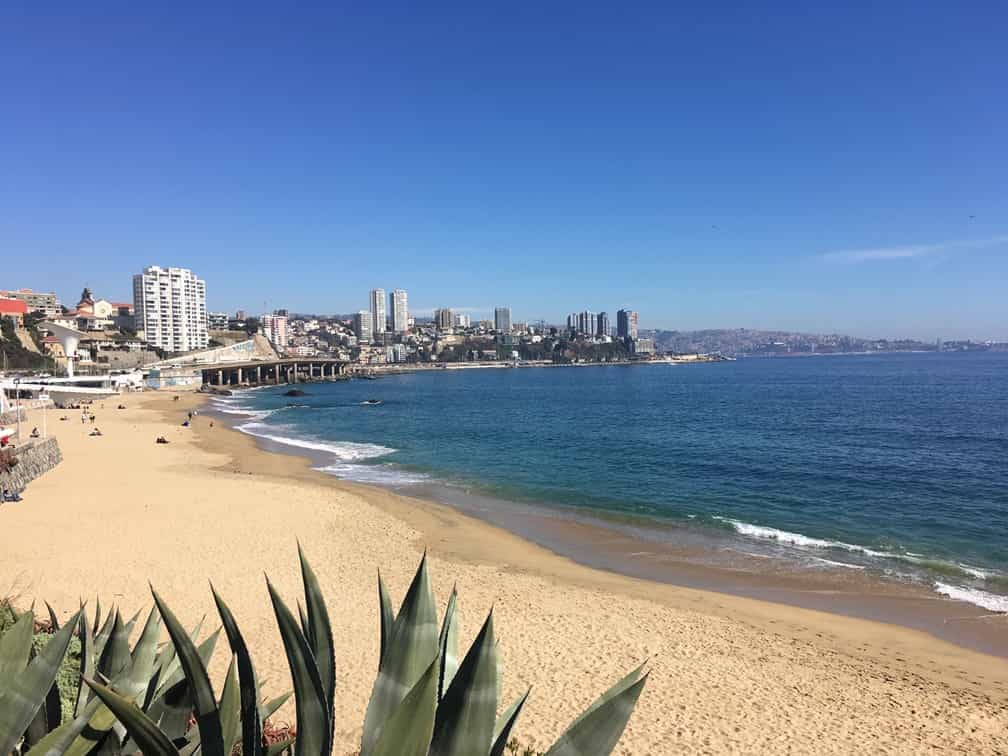
If you’re looking for one of the most rewarding rail journeys in South America, look no further than the Metro Valparaíso — also known by locals as “Merval.” Stretching 43 kilometers across the stunning coastal and inland landscape of central Chile, this single-line commuter rail connects five distinct cities: Valparaíso, Viña del Mar, Quilpué, Villa Alemana, and Limache. With 20 stations and a total travel time of approximately 63 minutes from end to end, the Metro Valparaíso is not just a means of transport — it’s a gateway to some of the most colorful, culturally rich, and naturally beautiful destinations in all of Chile.
Whether you’re a backpacker exploring South America for the first time or a seasoned traveler looking to dig deeper into the Chilean coast, this guide will walk you through the best stops along the line, from the bohemian port city of Valparaíso to the quiet, rolling hills of Limache.
Station Puerto: Where It All Begins
The journey starts — or ends, depending on your direction — at Estación Puerto, the westernmost terminus of the line, nestled in the heart of Valparaíso’s historic port district. This UNESCO World Heritage Site is one of Chile’s most iconic urban destinations, celebrated worldwide for its labyrinthine hills, electric street art, and a culture that pulses with creativity and resistance.
From Estación Puerto, you’re just steps away from the city’s famous waterfront, where you can watch container ships drift through the Pacific Bay and soak in the salty air of this legendary port. Head uphill — literally — to explore neighborhoods like Cerro Alegre and Cerro Concepción, where cobblestone streets are draped in murals, the buildings are painted every shade of the rainbow, and boutique cafés serve up some of the best coffee in the country. Streets like Templeman, Elias, and Hector Calvo are must-walks for anyone who appreciates urban art at its most raw and expressive.
Don’t miss the city’s iconic funicular elevators (ascensores), many of which date back to the late 19th and early 20th centuries. The Reina Victoria elevator, built in 1902, is one of the oldest still in operation and provides an atmospheric ride up to sweeping city views. The Paseo Gervasoni is another unmissable stop — a short cobblestone pedestrian promenade lined with bold murals, 19th-century mansions, and clusters of bars and restaurants offering some of the best views in the city.
For culture seekers, the Paseo 21 de Mayo on Cerro Artillería is a highlight, featuring the Museo Marítimo Nacional and a craft fair that stretches from one end of the promenade to the other. The Baburizza Museum, an Art Nouveau palace on Cerro Alegre, houses one of Chile’s most important fine arts collections. And if you want to walk in the footsteps of literary genius, you can visit La Sebastiana, Pablo Neruda’s eccentric hillside home, now a museum filled with the poet’s personal belongings and curiosities.
Stations Bellavista & Francia: The Gateway to Viña
As the metro moves northeast from Valparaíso, the Bellavista and Francia stations mark the transition into greater Viña del Mar territory. These stations are particularly convenient for travelers who want to explore the border zone between both cities. From here, a short walk takes you to the Puente Casino, the iconic bridge that connects you to the beachside heart of Viña del Mar.
Station Miramar: Coastal Elegance
Estación Miramar is your best entry point to the beach zones of Viña del Mar. This station drops you close to the city’s celebrated coastline, where the Pacific Ocean crashes against wide sandy beaches and elegant seaside promenades. Viña del Mar’s beaches — particularly Caleta Abarca and the stretch along Avenida Marina — are among the most visited in Chile.
On weekends and especially in summer, Avenida San Martín and Avenida Marina are closed to vehicles, transforming into a spectacular open-air promenade for runners, cyclists, families, and skaters along a three-kilometer coastal stretch. It’s one of the most refreshing urban experiences you’ll find along the entire metro line.
Station Viña del Mar: The Garden City
The Estación Viña del Mar is arguably the busiest and most tourist-friendly stop on the entire Metro Valparaíso line. It places you right at the center of Chile’s most elegant beach resort city, surrounded by a wealth of attractions within easy walking distance.
The Plaza Vergara and the adjacent Quinta Vergara — a lush botanical park that hosts the world-famous Festival Internacional de la Canción every February — are just minutes from the station. Art lovers will want to visit the Museo Palacio Vergara and the Artequin Museum, while history buffs can spend an afternoon at the Museo de Arqueología e Historia Francisco Fonck, which famously houses an authentic Moai statue from Easter Island.
One of Viña del Mar’s most photographed landmarks, the Reloj de Flores (Flower Clock), is a short stroll from the station and offers a quintessential photo opportunity against the Pacific backdrop. The nearby Wulff Castle, perched dramatically on the waterfront, and the Vergara Pier further complete the city’s coastal heritage scene. For shopping, nightlife, and gastronomy, the downtown area surrounding the station is packed with options for every budget.
Stations Recreo & Portales: Local Vibes
Recreo and Portales stations serve the residential neighborhoods that connect Viña del Mar to the port city. The Portales station is worth a stop for travelers interested in local life away from the tourist centers. Nearby Playa Caleta Portales is a working fishing beach where you can watch sea lions lounging on the rocks and fishermen unloading their daily catch — a raw, authentic slice of Chilean coastal life. Fresh seafood restaurants in the area serve up extraordinary ceviche and mariscal at prices that would be impossible closer to the tourist zones.
Station El Salto & Hospital: Urban Transitions
These stations serve the inner neighborhoods and hospital district of greater Viña del Mar, and while less touristic, they offer access to local markets and parks popular with residents. Travelers on a budget will find excellent local fondas (small traditional restaurants) and bakeries serving fresh marraqueta bread and empanadas near these stops.
Station Quilpué: The Sun City
Continuing inland, Estación Quilpué brings you to the self-proclaimed “Ciudad del Sol” (City of the Sun), named for its warmer, sunnier climate compared to the foggy coast. Quilpué is a pleasant mid-sized city with a laid-back atmosphere and a surprising number of attractions for visitors. The Zoológico de Quilpué is a family favorite, while the nearby Viña Los Perales offers a vineyard experience with a historic chapel that still holds traditional masses on weekends. Nature lovers can also visit the Granja Alturas del Sol for an agritourism escape from the urban bustle.
Station Villa Alemana: Heritage and Hills
One stop further east, Villa Alemana is a charming town with a strong sense of heritage and community identity. As its name suggests, the city was heavily influenced by German immigrants who settled in the region during the 19th century, and traces of that architectural and cultural heritage are still visible today. The Teatro Pompeya, declared a national monument, is one of the city’s architectural gems, along with the Municipal Stadium and the historic Capilla de Quebrada Escobar, a chapel dating back to 1817, making it one of the oldest in the entire Valparaíso region. Sunday mornings in Villa Alemana are especially atmospheric, with local markets and families strolling the Plaza de Armas.
Station Limache: End of the Line, Start of an Adventure
The final stop on the Metro Valparaíso line is Limache, a small, tranquil city surrounded by agricultural valleys and rolling hills that feel a world away from the coastal bustle. Limache is the ideal base for exploring the rural interior of the Valparaíso region. The town has a relaxed, traditional Chilean atmosphere — think tree-lined plazas, colonial-era churches, and huasos (Chilean cowboys) riding through the countryside.
From Limache, adventurous travelers can organize excursions into the Olmué Valley and toward the La Campana National Park, a UNESCO Biosphere Reserve that contains one of the last Chilean palm forests in the world and was famously explored by Charles Darwin in 1834. The park offers several trekking trails suitable for all levels, with the summit of Cerro La Campana rewarding hikers with panoramic views stretching all the way to the Pacific Ocean on a clear day.
Practical Tips for Riding the Metro Valparaíso
Getting around on the Metro Valparaíso is straightforward and affordable. You’ll need to purchase a rechargeable Metroval card at any station kiosk for approximately 1,350 CLP, and each ride costs around 600 CLP depending on the time of day. The metro runs daily, with trains operating from early morning until late evening. Peak hours can get crowded, particularly between Viña del Mar and Valparaíso stations, so weekday mornings or mid-afternoon rides tend to be the most comfortable.
One of the greatest pleasures of the journey itself is the scenery along the coastal section between Puerto and Recreo stations, where the train glides along the shoreline and treats passengers to sweeping views of the Pacific. Photography enthusiasts should aim for rides during golden hour — the light over the bay is nothing short of spectacular.
From the gritty, mural-covered hills of Valparaíso to the serene agricultural valleys of Limache, the Metro Valparaíso line delivers an extraordinary cross-section of Chilean life, culture, and landscape — all for the price of a single metro card.